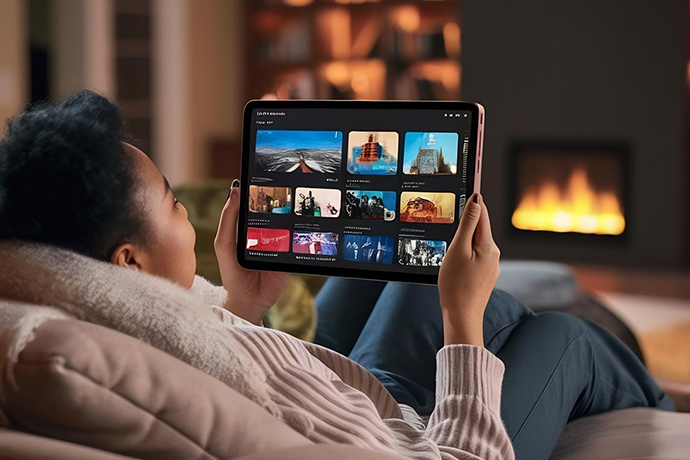
When organizations plan an OTT platform, they often begin with the viewer-facing experience: the website, mobile app, or Smart TV interface.
But a scalable streaming service needs a strong foundation behind those screens. Videos must be uploaded, organized, encoded, protected, published, monetized, and analysed. Managing these activities through disconnected tools can quickly create operational complexity.
That is why a Video Content Management System should be at the centre of your OTT platform strategy.
What Is a Video CMS?
A Video Content Management System, or Video CMS, is a centralized platform for managing video content throughout its lifecycle.
It acts as the control centre of an OTT platform, helping teams:
- Upload and organize video and audio assets
- Manage metadata, thumbnails, subtitles, and categories
- Create channels, playlists, series, seasons, and episodes
- Encode content for different devices and internet speeds
- Schedule publishing and control availability
- Protect content using DRM, encryption, and watermarking
- Manage users, subscribers, and devices
- Configure monetization models
- Distribute content across multiple screens
- Track engagement, performance, and revenue
A Video CMS turns a collection of media files into an organized, searchable, secure, and monetization-ready content catalogue.
Why Build Your OTT Platform with a CMS-First Approach?
An OTT application is what viewers see. The Video CMS determines how efficiently the platform operates.
Building the CMS foundation first gives you a central source of truth for content, rights, users, monetization, and analytics.
Centralized Content Management
A single programme may contain multiple video versions, audio tracks, subtitles, posters, trailers, and regional variations.
A Video CMS keeps these assets connected and organized. Teams can manage content by genre, language, series, season, episode, or channel without depending on scattered folders and spreadsheets.
Updates can also be made centrally and reflected across connected OTT applications.
Faster Content Discovery
As your content library grows, finding the right asset becomes more difficult. Metadata such as titles, keywords, languages, categories, cast & crew details, and content rights makes videos easier to search and manage.
AI-powered enrichment can accelerate transcription, tagging, and classification. Better metadata also improves viewer-facing search, recommendations, and content discovery.
Streamlined Publishing Workflows
Publishing a video involves more than uploading a file. Teams may need to complete quality checks, create multiple renditions, attach subtitles, configure rights, select monetization rules, and obtain approvals.
A Video CMS can structure this entire process, moving content from ingestion to review, encoding, protection, scheduling, and distribution. This reduces repetitive work and publishing errors.
Consistent Multi-Device Distribution
Viewers expect the same experience across browsers, smartphones, tablets, Smart TVs, and connected devices.
With a centralized Video CMS, one content catalogue can power multiple branded applications. Metadata, availability, security policies, and monetization rules remain consistent across every supported screen.
Built-In Content Security
Security should be part of the content workflow from the beginning.
A capable Video CMS can support:
- Digital Rights Management (DRM)
- Encryption
- Watermarking
- Geo-blocking
- Device restrictions
- Role-based access
- Secure authentication
- Content release windows
These controls help protect intellectual property and support compliance with licensing agreements.
Flexible Monetization
Different content may require different revenue strategies. A Video CMS allows monetization rules to be managed alongside each asset.
Depending on your business model, you can support:
- Subscription Video on Demand (SVOD)
- Transactional Video on Demand (TVOD)
- Advertising-supported Video on Demand (AVOD)
- Pay-Per-View
- Coupons and promotional offers
- Hybrid monetization models
This flexibility allows OTT businesses to experiment with pricing and adapt to changing audience preferences.
Actionable Analytics
Integrated analytics helps teams understand what happens after content is published.
OTT operators can monitor popular titles, watch time, viewer drop-off, device usage, geographic engagement, subscription activity, and revenue performance. These insights support better programming, marketing, and monetization decisions.
What Should You Look for in a Video CMS?
When selecting a Video CMS, consider both your current requirements and future growth.
The platform should provide:
- End-to-end content lifecycle management
- Simple catalogue and metadata organization
- Encoding/
, transcoding, and adaptive bitrate streaming
- Multi-device publishing
- DRM and enterprise-grade security
- Flexible monetization options
- Audience, content, and revenue analytics
- APIs and integration capabilities
- Reliable, scalable infrastructure
- An intuitive interface for non-technical teams
The right Video CMS should reduce operational effort rather than introduce another disconnected system.
The Sudarshan Approach
At Yotta Sudarshan, we see video management and OTT distribution as parts of one connected media ecosystem.
Sudarshan combines an enterprise-grade Online Video Platform with AI-powered Media Asset Management capabilities. Organizations can manage, distribute, stream, and monetize content from a unified, cloud-native platform.
With Sudarshan OVP, teams can manage content, users, devices, monetization, security, and analytics through a centralized CMS. The platform supports on-demand, live video, and audio streaming, along with branded experiences across web, mobile, and connected TV platforms/devices.
Businesses can use SVOD, TVOD, AVOD, pay-per-view, coupons, and hybrid revenue models. Content can be protected through DRM, encryption, watermarking, and geographic access controls.
For organizations with complex media libraries, Sudarshan Media Asset Management adds AI-powered metadata enrichment, intelligent search, collaborative workflows, version control, archiving, and content repurposing.
Together, these capabilities support the complete media lifecycle:
Ingest → Organize → Enrich → Protect → Publish → Monetize → Analyse → Archive
Backed by Yotta’s cloud and hyperscale data centre infrastructure, Sudarshan is designed to support secure, reliable, and scalable streaming operations.
Build the Foundation Before the Screens
An attractive interface may bring viewers to your service, but efficient content operations help the business grow.
Starting with a Video CMS gives you control over how content is organized, protected, distributed, monetized, and measured. It reduces complexity and creates a consistent foundation for every application and audience.
With Sudarshan, organizations can replace disconnected video workflows with an integrated streaming ecosystem, allowing their teams to focus on content, audiences, and growth. Ready to build a secure, scalable, and monetization-ready OTT platform? Discover Yotta Sudarshan.